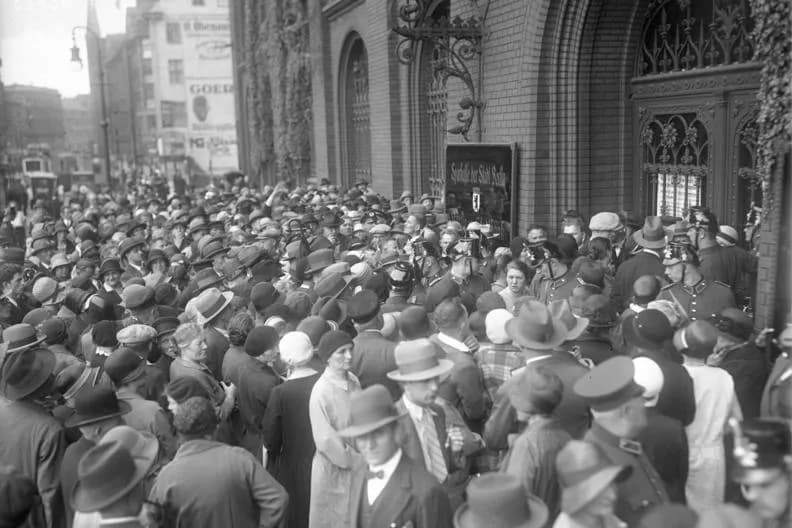
New Consensus is working to end the practice of bailing out “too big to fail” private corporations. For decades — centuries, actually — the United States has rewarded reckless speculators with generous, no-consequences bailouts with public funds. It is the equivalent of greeting gamblers at casino exits with bags of cash to cover their losses. Over time, this has reorganized the American economy around pure speculation and away from investing in industry and infrastructure.
Supporting this gambling addiction by America’s business class, has ruined the American people. We are trillions of dollars in debt with nothing to show for our borrowing. We have shut down or exported our productive industries. We have let our infrastructure crumble.
There is a way to turn this around: Rebuild our own public capacity for investment in the real economy. We can do this proactively by building new investment and coordination institutions, and we can do it by converting insolvent private institutions into public ones, instead of bailing them out.
On the eve of the crash of the AI Bubble, this agenda is more urgent than ever. New Consensus is calling for passage of The Won’t Get Fooled Again Act, to prevent another wave of bailouts when the current speculative bubble bursts.
A New Framework for Financial Crisis—Before the Next One Hits
The AI bubble is inflating. Banks are exposed. And America can't afford another bailout.
The Won't Get Fooled Again Act offers a different path: when systemically important institutions fail, convert them into public utilities instead of handing taxpayers the bill.
We're watching a familiar pattern unfold. Hundreds of billions are pouring into AI infrastructure while 95% of companies see zero return on their investments. Banks are exposed through venture debt, private credit, and complex off-balance-sheet deals that echo 2008. And when the bubble bursts, the standard playbook—bail out the connected, consolidate the survivors, stick taxpayers with the losses—will leave us more fragile than before.
The dollar has fallen nearly 11% in 2025. Moody's has downgraded U.S. debt. Interest payments now exceed the defense budget. We've spent our fiscal capacity on wars, tax cuts, and speculator rescues. The well is running dry.
The WGFAA creates a Conversion Protocol: when a systemically important bank or AI company fails, it doesn't get bailed out or sold to a larger competitor. It gets converted into a mission-driven public institution.
Failed banks become Public Benefit Banks—community-focused institutions that make loans to productive enterprises instead of chasing speculative returns.
Failed AI companies become public research utilities—ensuring critical infrastructure keeps running, model weights don't get sold to adversaries, and the public investment that made these technologies possible returns to the public.
Industry pays, not taxpayers. A Digital Stability Fund—financed by compute taxes and levies on the largest financial institutions—covers all resolution costs.
Speculators lose. No more purchasing equity at inflated valuations. The government pays only for tangible assets and proven IP. Shareholders are wiped out. Executives face clawbacks.
The public gains lasting assets. Instead of pouring money into a hole to restore the same fragile system, we transform failed speculation into permanent public infrastructure.
The next crisis is coming. This time, we can be ready.

In 2023, in response to the failure of Silicon Valley Bank and other large banks, New Consensus release a plan for converting failed banks to public banks.
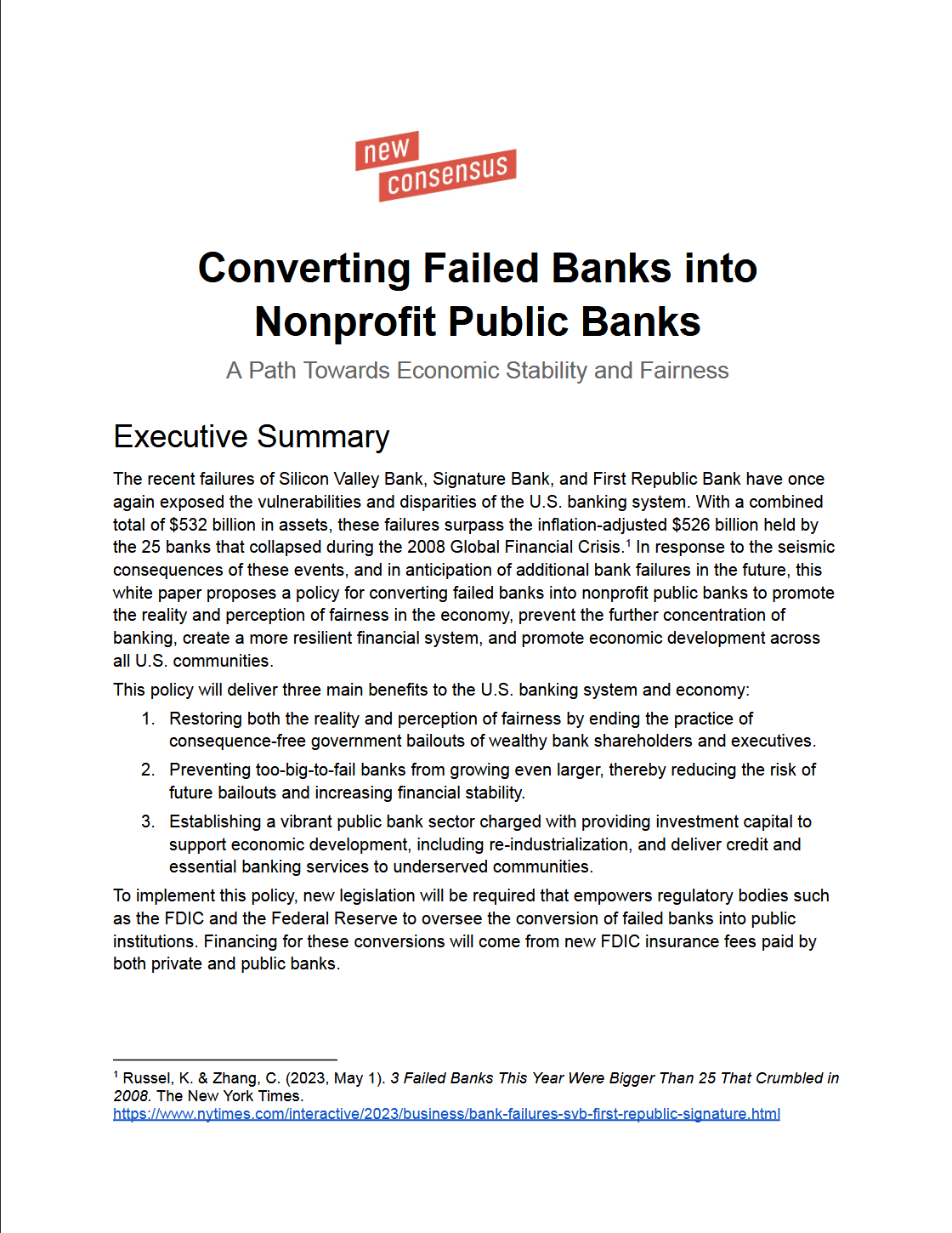
The failures of Silicon Valley Bank, Signature Bank, and First Republic Bank once again exposed the vulnerabilities and disparities of the U.S. banking system. With a combined total of $532 billion in assets, these failures surpass the inflation-adjusted $526 billion held by the 25 banks that collapsed during the 2008 Global Financial Crisis. In response to the seismic consequences of these events, and in anticipation of additional bank failures in the future, our white paper proposed a policy for converting failed banks into nonprofit public banks to promote the reality and perception of fairness in the economy, prevent the further concentration of banking, create a more resilient financial system, and promote economic development across all U.S. communities.
This policy would deliver three main benefits to the U.S. banking system and economy:
To implement this policy, new legislation would be required to empower regulatory bodies such as the FDIC and the Federal Reserve to oversee the conversion of failed banks into public institutions. Financing for these conversions will come from new FDIC insurance fees paid by both private and public banks.
This proposal is now superseded by the Won’t Get Fooled Again Act.